Monday, February 27, 2023

Cambridge Portfolio Week 3 (Script)


For the final post of week three I am exited to show you my groups script for our film opening. 


We believe that our script needed to include natural dialogue that didn’t sound forced or too professional for our characters.


Our main character of the film opening is on the phone with his friend, so even though we want a standard of professionalism when making the script, we want our dialogue to flow as if it was a real conversation. 


The script does not contain heavy amounts of dialogue because most of the film opening, especially the second half, is focused on the killing.


Script


Saturday, February 25, 2023

Cambridge Portfolio Week 3 (Shot Research)

 For the third post of week 3, I wanted to research how I could effectively film our film opening in low-lit areas while also not making it too difficult to see. The three technical features on my camera that I will need to focus on are ISO, shutter speed, and aperture.

ISO - ISO is increased most often to make shots more visible by amping up the brightness in the shot digitally. A camera's ISO settings affect the amount of light that is shown when recording. When the ISO is increased past the base ISO for the camera, digital noise becomes very apparent and can make a shot look worse. To avoid this, I will record all of our footage at the base ISO settings for my camera. if the ISO needed to be increased I would not raise it past 800.

SHUTTER SPEED - For my camera's shutter speed, it all depends on the frame rate I record on. The higher the shutter speed, the darker the image, which is something I want to avoid. The lower the shutter speed, the more motion blur. My group wants to avoid this so that we can keep a cinematic and focused look o our film. Shutter speed operates on a 1/x scale, with x representing a number that can be altered depending on your needs. The main rule of thumb that is used when choosing shutter speed, is to stick to having x be double your frame rate. For example, if I am shooting at 30fps I would want my shutter speed at 1/60. For the film opening, I will likely use 24fps, but depending on what my group finds the best visually, the frame rate might change.

APERATURE - For my aperture, I want to keep my lens open as wide as possible. This allows for more light to be absorbed by the lens, which allows for the little light in the shot to have a greater impact. This makes it easier to see in low-light environments. Using my camera's base lens, which is the lens that comes built into the camera, and not using the attached lens, will allow for the most light to be captured. this is because lenses usually do not have as much width as a regular built-in lens. people usually use lenses to zoom in, so it is natural that lenses don't open nearly as wide.


I gathered this useful information from Jeven Dovey's youtube video.

“How to SHOOT in LOW LIGHT and REDUCE NOISE (Night Filmmaking).” YouTube, 31 May 2018, https://youtu.be/upIFBndu7AQ. Accessed 25 Feb. 2023.

https://youtu.be/upIFBndu7AQ

Friday, February 24, 2023

Cambridge Portfolio Week 3 (Schedule)

 For my second week three post, I will explain my group's schedule for our film opening.

My group found that creating a schedule early on was a smart decision because it allows our entire process to be organized. We believed that if we wanted until week two/three to make on, some time constraints might reveal themselves.

I had previously posted the schedule in my blog post titled Cambridge Portfolio Week 2 (Planning). We have so far been able to stay on track/schedule. If any inconveniences or changes are made and we need to alter our execution of the film opening, we will notify you on our individual blogs. 

We will also update the schedule with the word "done" in parenthesis, for steps we have completed. This will allow us to make sure we all understand what we have and have not completed. Without leaving some sort of market to track progress, there may be confusion in our group, which is something we definitely want to avoid.

You can access the schedule using this link


Here is our schedule in its most updated form:

Week 1 (2/6-2/12) Past
Read the requirements of the project (done)
Chose whether to work in a group or alone (done, group)
Brainstorm genre and plot ideas for the project (done, need to finalize)
Chose type of film opening (done)
Transition blog post (done)

Week 2 (2/13-2/19) Current
Create a schedule for the project (done)
Research crime genre and its conventions (done)
Research other mystery film openings to gain inspiration and direction (done)
Finalize plot idea and genre (done)
4 blog posts (done)

Week 3 (2/20-2/26)
Do any lingering research (done)
Converse on the sequence of events of the opening with my group and when we want to film it (done)
Make script
Make storyboard (done)
Look into music for the opening

4 blog posts
Week 4 (2/27-3/5)
If any research is still necessary do it NOW
Make any changes if necessary to the plot and the order 
Film the project
3 blog posts

Week 5 (3/6-3/12)
Do any reshoots if necessary
Research film opening editing for the selected genre
Experiment with the techniques I see that have worked
Begin editing process
3 blog posts

Week 6 (3/13-3/19)
Finish editing the project
Ask for feedback from friends and peers
Try and fix any mistakes this week
Begin researching information for the creative critical reflection
3 blog posts

Week 7 (3/20-3/26)
Finalize the final edit of the project
Finish creative critical reflection research
Make the creative critical reflection
3 blog posts

Week 8 (3/27-4/3)
Finalize the creative critical reflection and film opening if not done so already
Reflect on the process of post-production in 2-3 blog posts
Last blog post on moments and changes overall
Post final opening and creative critical reflection to the blog
Celebrate 


Thursday, February 23, 2023

Cambridge Portfolio Week 3 (Storyboard)

 In the post for week three, I will focus on my film openings storyboard. 


For the film's opening storyboard, I wanted to get the story within 20 panels for the film storyboard. Ten panels equal about a minute of the film opening. I found this would make it easier to structure the story and ensure it all fits within the two-minute time constraint.


In the storyboard, I described the purposes behind certain shots so that my group can better understand their purpose and keep shooting simple. 


We plan to begin filming next week and the storyboard will make it much easier for my group to successfully execute our film opening. Having a storyboard will allow my group to stay organized and prevent any frustration that might stem from procrastination and/or short deadlines. 


In the storyboard, I described each s moment in the film and the purpose it brings to the film opening. For our story, we want to reveal the killer in the same fashion that “The Riddler” was introduced in The Batman (2022).


Storyboard:


The scene we want to recreate from The Batman (2022)

Sunday, February 19, 2023

Cambridge Portfolio Week 2 Post (Characters/Plot Aspects)

 For my final blog post of week two, I will be centering it around our characters and plot aspects.


Our film opening will include two main characters


1. The normal person (protagonist)

2. The doppelgänger/murderer (antagonist)


The opening will contain limited amounts of dialogue so that the audience has to work and pay attention to the details of the story.


The protagonist is winding down and getting ready for bed when he starts to notice things are not where they’re supposed to be in the house and has an overwhelming feeling that he is being watched. This is just our short synopsis as we are not entirely sure of the species of our story and do not want to give too much away.


We can then expand on how the specific intentions of the doppelgänger are unknown, but is without a doubt evil and looking to cause harm. 


We will develop our protagonist through his surroundings using props to convey his personality, and will use stings for our antagonist to have the audience to be able to associate him with something.

Saturday, February 18, 2023

Cambridge Portfolio Week 2 Post (Genre)

 For my third blog post of this week, I will be focusing on genre. The genre I have chosen to research is horror since our film opening is meant to be horror/supernatural. Although my group has not come to a final decision on the exact genre we are pretty confident it will at least relate to the horror element.


We took inspiration from horror films such as Us (2019) and Skinamarink (2022). We want our film to focus on unsettling elements along with having our audience put together the pieces of our narrative, rather than communicating it through dialogue.


The horror genre is often associated with jump scares and frightening imagery. Although these techniques are effective at giving a good scare, we are aiming to create a disturbing atmosphere. We found that it is best to make the Mis-En-Scene of the film opening dark and dreary. This engages our audience by adding mystery, which incentivizes them to want to figure out the story.


I find that for an audience to be truly disturbed, we need to place our subject in clear danger that they are ignorant of. Alfred Hitchcock suggested that “to create suspense, you show the audience a bomb under the table before cutting to the clueless patrons seated around it.” We also want our scenes to feel off, but not make it obvious what is making the audience feel uncomfortable. I think this would work best if we let our audience sit with the aftermath of the eventual death of our main character. We could achieve this by having still shots of the house. We would not include any sound during these shots to highlight the idea that “life goes on even after death.” The silence will be uncomfortable as we can focus on some props that had some use earlier in the film, and how they no longer serve a purpose due to our character's death.


None of these narrative decisions are final as our script must be made, but I believe these ideas will contribute to our goal of capturing the essence of a horror film.


hannahgranberry, By: “The Anatomy of Disturbing Films.” Flip Screen, 24 July 2021, https://flipscreened.com/2021/07/25/the-anatomy-of-disturbing-films/. 

Us (2019) Skinamarink (2022)

Friday, February 17, 2023

Cambridge Portfolio Week 2 Post (Planning)

 For my second blog post of week two, I have decided to focus on my group's planning. We have created a schedule which if needed can be altered to adapt to our needs. We are set to start shooting sometime in week four. I will provide updates in future blog posts if this is subject to change. Any and all changes to the schedule will be reported on my blog.

Something we also wanted to focus on for our planning is the necessary tools and locations needed for our film opening. We will be using my equipment stated in the previous blog post and are still discussing location. We are confident that the film opening will take place within a home, all that needs to be confirmed is whose home. Whether that is one of our group members' house or a friend's. This all heavily relies on our script. Some homes may night have the proper layout that fits our script. If it is too difficult to find a proper house that matches our script. We will make changes to our plot but keep the same overall narrative. 


Stay tuned to learn more about our official schedule and plans!


Here is the schedule 


AICE Media Studies AS Film Opening Schedule 

Thursday, February 16, 2023

Cambridge Portfolio Week 2 Post (Technology/Technical Elements)

This week has been quite exciting, as on Tuesday, February 14th, I had a brand new piece of equipment delivered to me. This piece of equipment s called a "Gimbal", and it stabilizes my camera so that shots are more stable. This piece of technology will significantly improve the quality of the film opening as it will allow my partners and me to make sure our shots are void of shaking movement.

The specific Gimbal I purchased is the Weebill S. I have been practicing with it since it arrived and have learned how o function it properly. This will make the filming process easier and will allow shots to be executed much easier. 


I have also discussed with my partners the mood of the film opening and what technical elements we can use to convey our story. A movie that has inspired us is the 2022 analog horror film Skinamarink. This film has been able to do something that so many other movies fall short of, and that is engaging the viewer and feeling as if you are in the setting with the characters. The film is mainly comprised of still shots but has ambient music and sound effects that create a bone-chilling experience. Miguel and Abhiram agreed with me on the idea that we should make many of the scenes dimly lit and somewhat grainy so that we can show and not tell our story directly. This gives our audience enough context clues by immersing them and giving them time to think bout what is taking place.


Another piece of technology we will be using is my Panasonic Lumix G100 camera. This camera allows me to tamper with the ISO and white balance settings. When increasing the ISO in dark spaces it creates digital noise/film grain. This is artificial light made by the camera. The white balance allows me to change the hue of the video recorded, we will be aiming for a warm blue tint in order to convey a darker atmosphere. The digital noise/film grain and the white balance settings are incorporated into the camera, which will save time with editing.


I cannot guarantee we will use these coloration and light settings, it all depends on what we think looks best when recording. I will be sure to update any changes as it relates to this.

Sunday, February 12, 2023

Cambridge Portfolio Week 1 Post

This post will be the start of something great, for it is the first post of my Cambridge Portfolio project. I will be provided weekly updates documenting my journey with the portfolio project. I am working in a group of three, my group members are Abhriam Pinnity and Miguel Mendoza Ortega. This project counts towards our AICE examination grade so the three of us will produce the best product possible and will gain valuable experience. 

In class, my group discusses creating a horror/crime film opening. We found it interesting to add a sense of mystery to our film opening by giving our audience 2+2, and not 4. This will allow our audience to have to decipher the meaning and direction which engages them. We will not make the purpose too confusing as we don't want our audience to be perplexed and left in the dark about where the story is going. Our film opening will likely be about someone's murder but we will not just create a two-minute story, but rather one longer so that we can add more depth and detail into the opening two minutes. A piece of media that has inspired my group is the film opening of Matt Reeves The Batman (2022). This film has a mysterious tone in the opening. The audience knows that the sequence is leading up to Batman's reveal but is not immediately shown him, instead having to put together the pieces of where and how he'll show up. I have always been interested in the crime/horror genre and have thought up possible ideas. Despite this, I know I will still need to research both genres to better educate myself on the proper techniques to convey the story.

I am passionate and excited to work on the project with my team members and cannot wait to show you what we make. My next weekly post will be uploaded sometime before February 19th, 2023 so stay tuned!

Wednesday, February 8, 2023

Music Marketing Blog Post #2

In this blog post, I will discuss the intricate workings of the music marketing project I worked on with my members Abhiram Pinnity, Miguel Mendoza, and Olivia Bouvier.

This project requires extensive research and planning to be completed in a structured and well-thought-out manner. To begin, my group was assigned the pop genre so we found created case studies of successful and popular pop artists including Ariana Grande, Taylor Swift, Meghan Trainor, and Harry Styles. These artists all share a common trait, in that they have been able to properly market and distribute their music to other target audiences. My group examined the methods by which these artists were able to use cross-media convergence and synergy to increase the popularity and sales of their products, both digitally and physically. 

My group then proceeded to create a storyboard for our music video that contains a total of 20 cells that focus on the main plot points of the story. We decided to make our music video in a storytelling format. Our music video tells the story of a boy who is infatuated with a girl who belongs to another. We chose this plot because it matched the lyrics of "She Will Be Loved" by Maroon 5, the song we chose based on our genre. After this, we created our PowerPoint presentation and laid out some basic information on some of the slides.

I met with Olivia Bouvier and two friends of hers to shoot the music video as Abhriam And Miguel had fundraising events that required their presence. For the music video, I used my Panasonic Lumix DC-G100K and a Zeadio Handheld Stabilizer. We spent approximately 2-3 hours recording the music video and bringing the storyboard to life. 

After all, the scenes were shot and we were satisfied with the resulting videos, I began editing the clips together on a software called CapCut. I first uploaded the videos from the recording session and place them chronologically by following the storyboard format. Once this was completed, I cut certain videos that did not have a good end product or did not match well with the rest of the videos. When I finally had all the videos I needed, I uploaded "She Will Be Loved" into the software and muted the clips to prevent overlapping sounds. The clips did not sync perfectly with the lyrics so I trimmed some to make them match the lyrics and the tone of the song. 

As I was editing the video, Abhiram, and Miguel began to add important information and make changes to the Powerpoint presentation. Once I was finished with the music video and finished the special coloring effects and made sure everything was synced properly, I joined them and started to work on slides as well. 

I created our brand logo by finding a photo online of a heart with a unique design and engaging the coloration to match our group's title, "Maroone IV". I then followed this up by creating a fake social media post using an Instagram template to create a social media post that our band would upload. Once the slides had the proper information on them, Oliva made design changes to improve readability and engage our audience.

On Monday, February 6th, 2023, my group presented our music marketing Powerpoint presentation that included an embedded version of our music video.

As I reflect on our presentation, I realize now that the slides presented should have been divided more evenly among our members and not just presented in chunks, this would have allowed the presentation to flow better and engage our teacher and classmates more.

I learned how to work as a team when executing important tasks, especially when shooting the video. It is important to be able to express my ideas properly to allow a better-resulting video and presentation. This project has allowed me to better communicate with others.

This project will be helpful in developing my Cambridge portfolio as it provided an opportunity to research and focus on a singular goal with others. I now have a better understanding of how to go about creating videos, which will help with my two-minute film opening. This project will also let me now better understand how to go about researching and finding crucial information needed for my Cambridge portfolio.


Research Chart: 

https://docs.google.com/document/d/1Yx3XmdKNrqDerKsulGw5BY1LzzRLR6_5iyVyz0i_7to/edit?usp=share_link


Storyboard:

https://drive.google.com/drive/folders/1jy1-vC3oXPyE7qPcoob_j-VzTl1L2pUB?usp=share_link


Music Video:

https://drive.google.com/file/d/1AN0SdfnN77iAzZ7q31iZJAgUkpmZfdYa/view?usp=share_link


Powerpoint Presentation:

https://docs.google.com/presentation/d/1t7LWpW224pzFd0SZVRLtZAVuYn1zfGLw/edit?usp=share_link&ouid=117291154260436755880&rtpof=true&sd=true

Saturday, January 28, 2023

Music Marketing Blog Post #1

In this blog, I will discuss my music marketing group project for AICE Media Studies AS.

After being assigned the pop genre and choosing the song "She Will Be Loved" by Maroon 5, the project underwent a brainstorming phase in which my fellow members Olivia, Abhiram, and Miguel threw around ideas. We narrowed down the possible formats of the music video to storytelling, as we thought the lyrics could be put into a living picture. Once the members of our group agreed on the format of the video, we quickly went into making our music research chart to educate ourselves on the music industry.

In the next phase of planning, our group created a storyboard that consists of 20 frames to cover the important scenes in the music video. The storyboard can be found at the end of the blog post. In the creation of this storyboard, our group thought of unique shots and angles that could be used to convey the story in an effective yet engaging way. We took certain verses and lines from the long to create visual mediums in which they could be represented. Many of the shots in the music video follow along with what the lyrics describe.

In the planning/brainstorming process, we did run into some practical issues on how some shots may be achieved. Some shots were too dangerous or wouldn't provide a stable shot if attempted. Our group was able to find solutions to these issues by either finding simpler ways to convey our message or finding clever ways to work around the problem and execute the original idea. 

The next steps include compiling the uncut footage sequentially to cut or shorten shots to keep a well-produced video that comes off as professional as possible. After the editing process, our group will finish up our presentation and make sure to engage with our audience and express our ideas properly.


Monday, October 31, 2022

Genre Research War

War Genre

War films are often associated with loud explosions and gunshots, heroic men, and flashy action. Deep down, war films are stories that are made or inspired by true events just like any other film genre. War films help depict the gritty and dark nature of humanity, exposing some uncomfortable truths, while sometimes serving as propaganda. These films are often targeted toward the younger male adult demographic.


Content

War films are often comprised of key elements, that include, tension, action, and drama. Tension in a war film is that feeling you get when you know something is coming, whether it be a random explosion or a declaration of war. 

Tension is used to keep the audience, particularly men, on the edge of their seats in anticipation of what will happen next. 

Action is the driving force that keeps audiences coming back for more, everybody loves a good action sequence, particularly because it boosts your adrenaline as you watch the hero sneak past enemy lines. Action sequences usually follow tense sequences. 

Drama is an extremely important factor in making a war film. It's not enough to just have loud noises and flashes effects, but also a well-written story that takes time to develop its main characters. Dramatic sequences where the main character loses his or her life can pull at the heartstrings of the audience. A film is an art form and art is supposed to evoke an emotional reaction from the audience, dramatic sequences incorporate this well as they help audiences bond over the characters displayed on the screen, having the audience leave the theater thinking about their new favorite character.


Dunkirk, 1917, and Saving Private Ryan, use these three elements effectively.

Production Techniques


Using long takes is an effective way to add a sense of realism to a war film. If a film uses too many cuts, the audience is less likely to connect since they are constantly reminded of the fact that they are watching a movie. The war film 1917 uses this technique very well, as it is one of the key points that people bring up when watching this film. 1917's storyline is set to the exact time of the runtime, so if 5 minutes pass in the movie, 5 minutes pass within the context of the story. 1917 uses many "hidden cuts" as it is not practical to shoot 2 hours of footage without any breaks. These hidden cuts are used to prevent the audience from noticing that the camera has cut a shot, and to keep the audience engaged in the film while adding a sense of realism. 


Another important technique is sound design, whether it be artificial or foley. The sound design also adds realism if done properly. Sound can be used to represent moments of grief, fear, and triumph, among other things. When the main character fires the final shot killing the antagonist, you will often hear a triumphant score in the background. This is done to add layers to the emotion within a film. It is one thing to see something happen, but to feel it through sound is a whole other level of immersion.


How is Genre Marketed


The war genre is often targeting younger male adults since violence and action are heavily preferred in the media consumption of this group. When a war film is marketed, specifically through the trailer, there is a heavy focus on the action aspect, rather than the emotional aspect. Most war film trailers include heavy amounts of violence including, gunshots, swearing, and explosions. 
Even though war films are targeting men, that does not mean that war films don't have their own female demographic that enjoys them, despite this, since men are the vast majority of the audience, the marketing team behind these films make sure to bring their main audience of men to the theater.


Sample 1


All Quiet On The Western Front (2022)

All Quiet On The Western Front is a 2022 war film that follows Paul Baumer and his classmates as they enlist to join the German army in World War I. This film tells its story through the lens of young German soldiers to highlight the tragedies and horrors war has to offer. 
This film embodies this genre since it has a heavy focus on the dramatic element of war, and how it affects the minds of those in it, particularly once-happy young men. It does not shy away from heavy activities such as explosions, gunfire, and shootouts. 


Sample 2


13 Hours: The Secret Soldiers Of Benghazi (2016)


13 Hours: The Secret Soldiers Of Benghazi, is a 2016 war film based off the true story of six CIA contractors who save the lives of Americans under attack in the U.S. embassy in Benghazi by Libyan militants on September 11th, 2012. 
This film is a great representation of tension in a war film, there are many moments where you can tell something bad is about to happen, and once it does, chaos ensues in action sequences with heavy gunfire and swearing, and sometimes explosions. There is a dramatical element as the main characters are often put into high pressure situations where lives are at risk.


More Samples

Fury (2014)


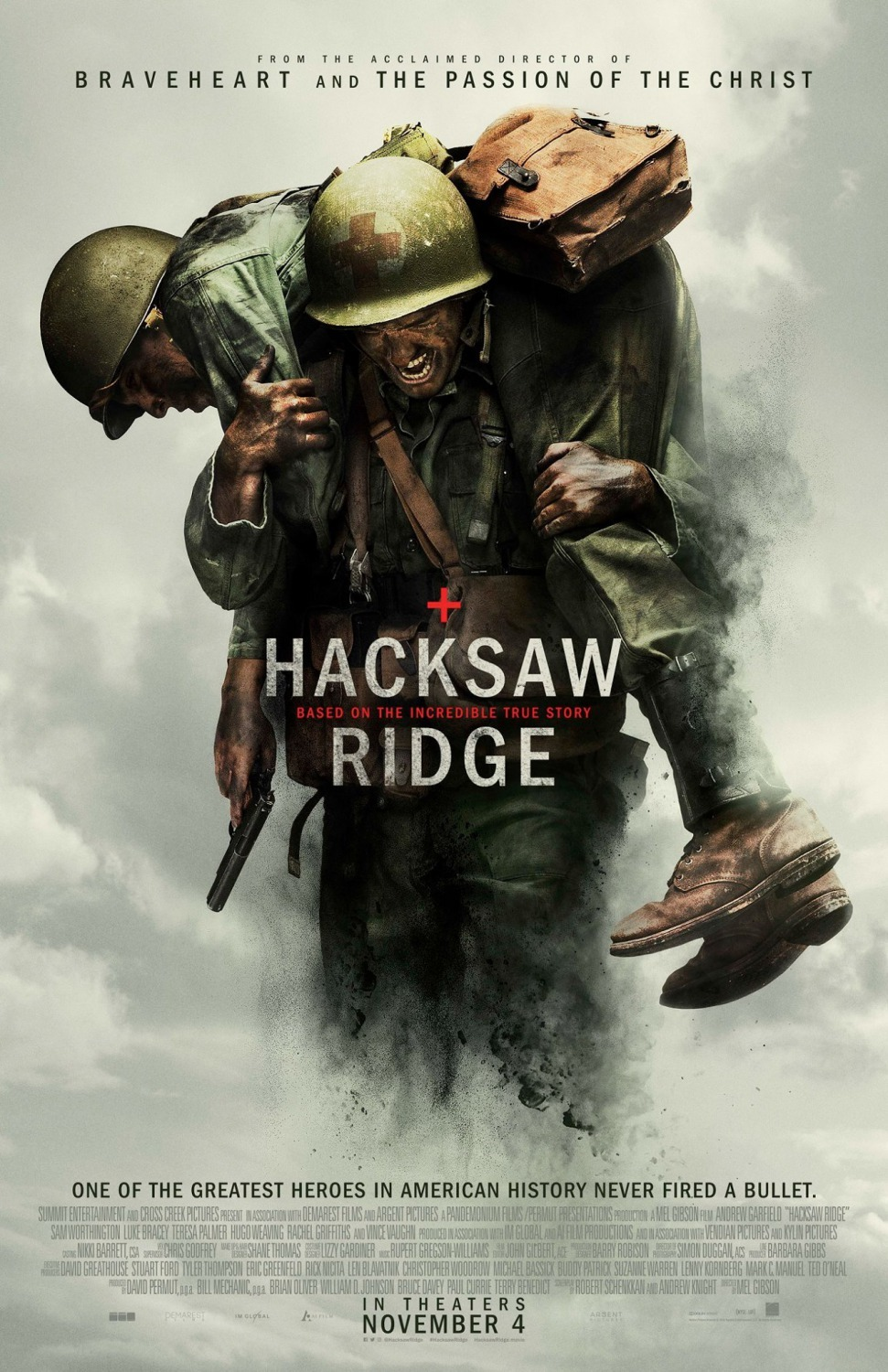
Hacksaw Ridge (2016)


Midway (2019)

American Sniper (2014)


12 Strong (2018)


Full Metal Jacket (1987)


Friday, October 28, 2022

 My name is Hayden, I am a student in the international Cambridge program, and I am a sophomore in high school. I am creating this blog to bring my process in documenting my Cambridge portfolio project.